
Architecture · 4 min read · 12 September 2025
The Staircase as Centrepiece
A staircase moves you between floors, but the best ones do more — they hold a room together, catch the light and become the piece you remember.
Words by Wolf San Savino
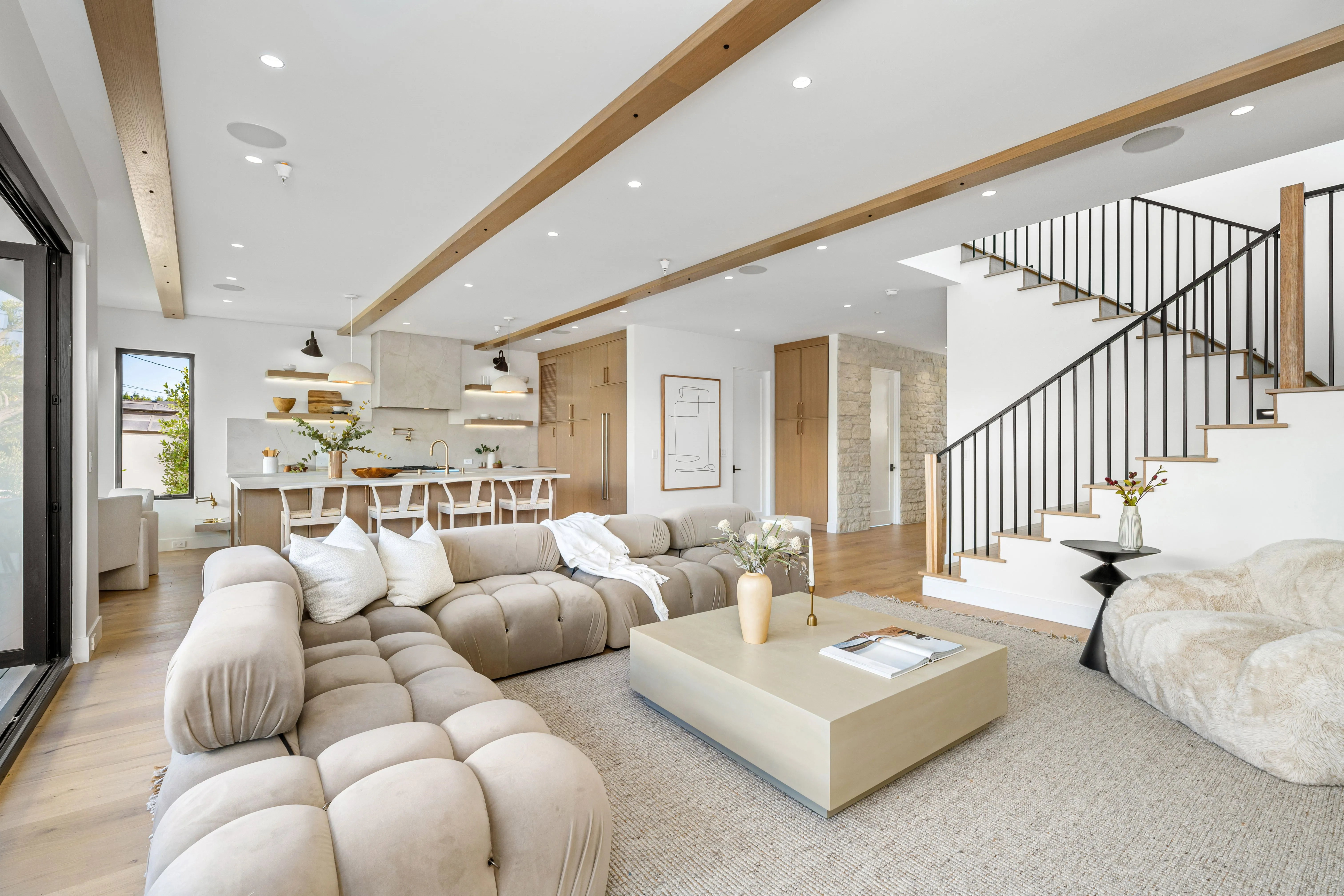
In most houses the stairs are an afterthought: a boxed-in run pushed against a wall, treads carpeted in something forgettable, the whole thing apologising for the space it takes. Yet a staircase is often the largest sculptural object you will ever own. It occupies a double-height void, it is seen from above and below, and you pass it a dozen times a day. Treated with intent, it stops being mere circulation and becomes the heart of the plan — the thing a visitor’s eye finds first and the detail the family quietly takes pride in.
That shift, from utility to centrepiece, is less about extravagance than about decisions. Where the stair sits, how it meets the floor, what it is made of, how daylight falls across it. Get those right and even a modest flight earns its keep.
Geometry before ornament
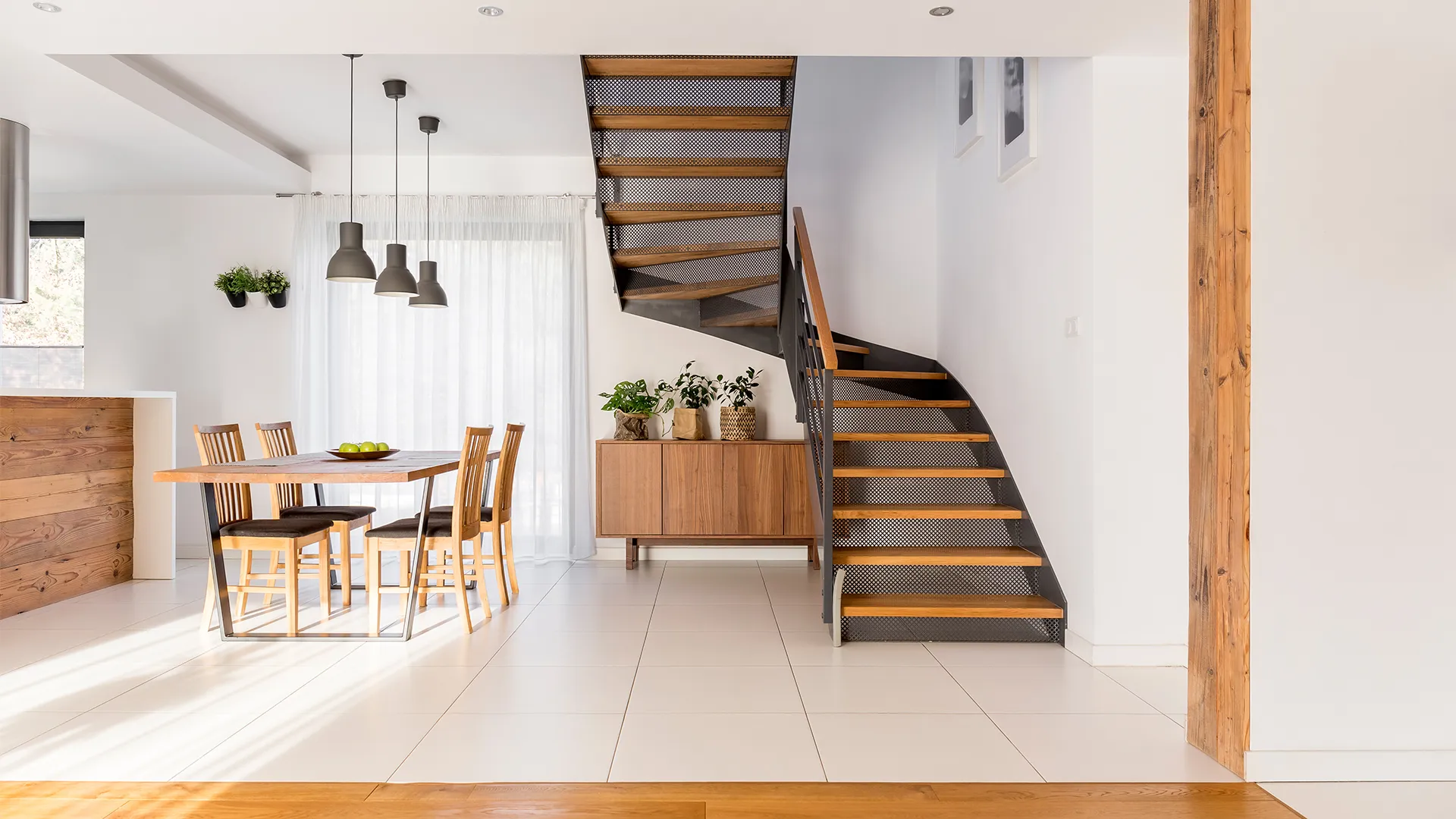
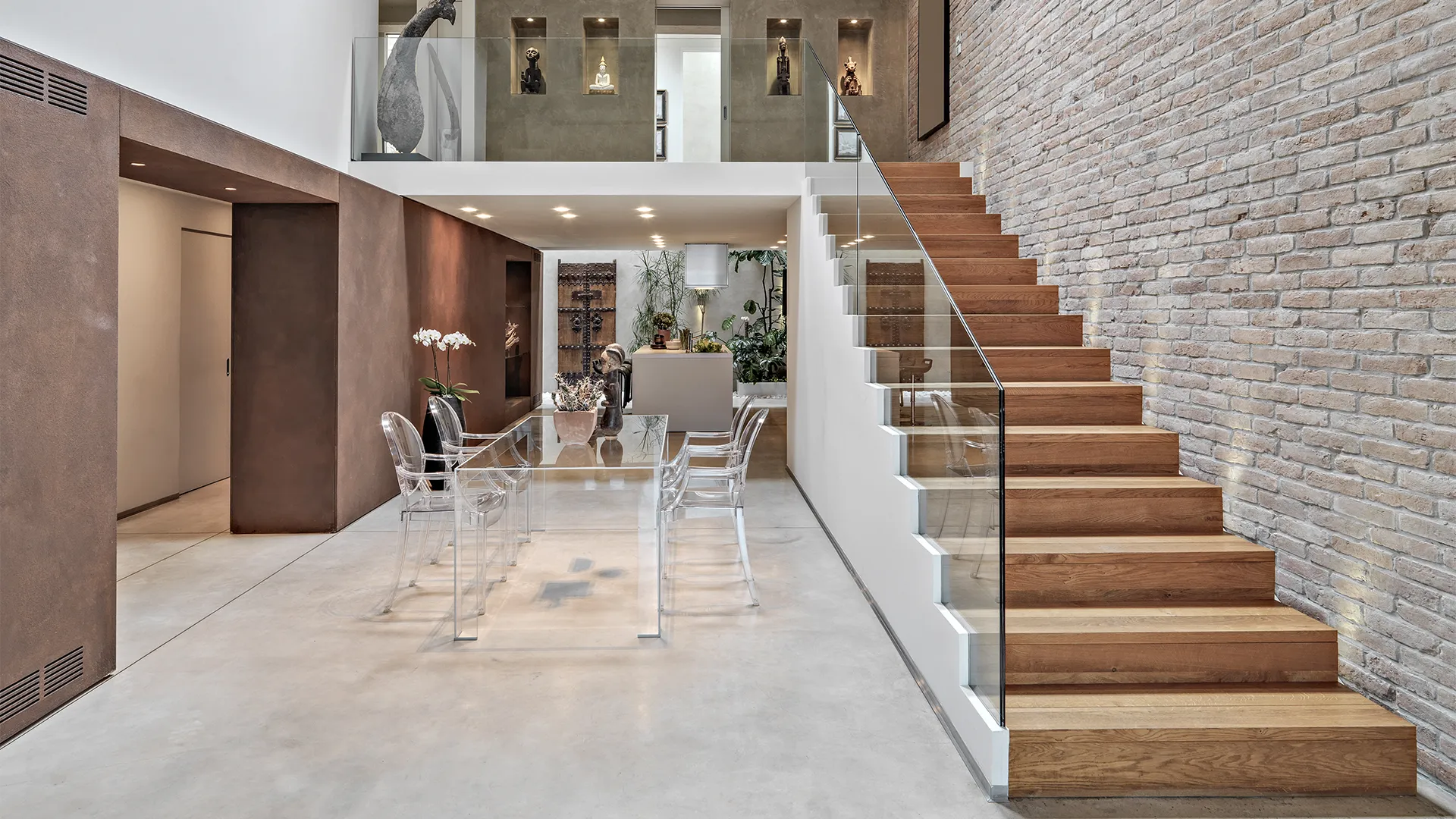
A beautiful staircase begins with its line through the house, not its handrail. The first questions are spatial. Does it rise in a single confident run, or turn on a half-landing to slow the climb and open a view? Is it pressed to a wall for solidity, or pulled into the room so light passes around it? A cantilevered flight — treads appearing to float from a single hidden spine or a structural wall — reads as weightless precisely because the engineering is invisible. The drama is earned by what you cannot see.
Proportion does the unseen work. The relationship between the going (tread depth) and the rise governs how the stair feels underfoot; a generous, shallow rise feels gracious, a steep one feels mean, and the body registers the difference long before the mind names it. Building regulations set the outer limits, but comfort lives in the inches inside them. We often draw a stair a dozen times before a single material is chosen, because once the geometry sings, the rest is finishing.
A sculptural staircase also wants room to be seen. A flight crammed into a tight stairwell can be exquisitely made and still feel suffocated. Borrowing a little floor area, opening a void to the landing above, or aligning the run with a window transforms the same number of steps into an event.
Material, light and craft
Material is where character arrives. Oak brings warmth and grain, and ages into something better than the day it was fitted — the obvious choice for a country renovation or a barn conversion where the wood can speak to old beams. Limestone treads give weight and a cool, honest surface that feels older than the house; pale stone also bounces daylight deep into a hall. Steel allows the thinnest possible structure, a black or patinated stringer holding treads that seem barely supported. Glass — for balustrades or, more boldly, for treads — keeps a flight visually open so the architecture reads as one continuous space rather than a series of barriers.
The most memorable staircases rarely rely on a single material. A blackened-steel spine carrying solid oak treads, a limestone flight with a frameless glass balustrade, a timber stair with a slim brass handrail worn smooth by hands — the contrast is what gives the object tension. At Wolf San Savino we pair one structural material with one tactile one, so the eye reads both the strength and the touch.
Then there is light, which is the cheapest luxury a staircase has. A rooflight directly over the void turns the whole flight into a sundial, the shadow of the balustrade tracking across the wall through the day. A tall window beside the run washes the treads and reveals the grain or the stone’s surface. Even a single well-placed fitting, grazing light down a textured wall, can lift an ordinary stair after dark. Light is what makes the workmanship visible, and workmanship, in the end, is the point. The join where a tread meets the wall, the return on a handrail, the way a baluster lands on stone: these are the details a maker labours over and a guest never consciously notices, only feels.
The case for restraint
There is a temptation, with a feature staircase, to over-design — to add a sweeping curve or a flourish of balusters because the budget allows it. The better instinct is restraint. The staircases that hold up over decades are usually the calm ones: a clean run, honest materials, light handled with care, every joint considered. They draw attention not by shouting but by being obviously, unarguably right.
If you are planning a renovation or extension, resist treating the stair as plumbing to be hidden. Give it a moment in the plan, a source of daylight and one good material it deserves. A staircase done with intent will outlast every other decision in the house, and it will still be the first thing anyone remarks on long after the paint has been chosen and forgotten.
Considering a project?
We design and deliver homes, extensions and interiors across the UK and Italy. Start a conversation →